Module 6: Theatre Stage Makeup
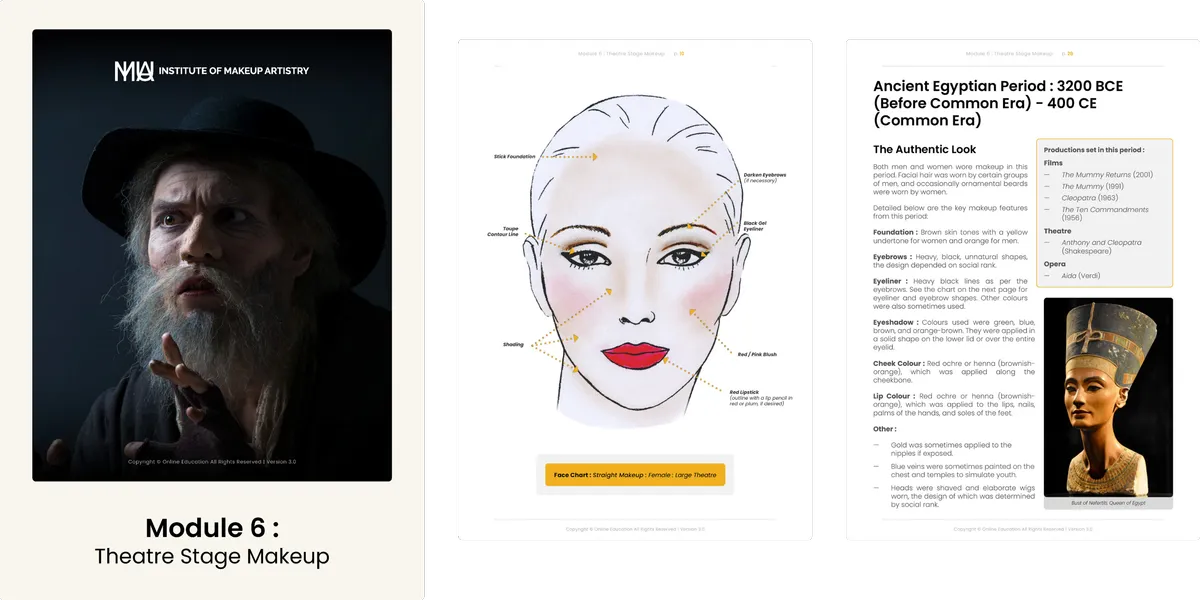
In this module, you’ll travel back in time to explore the history of makeup and how it has been used in theatre across cultures and eras. You’ll learn how makeup for the stage differs from film and TV, and how lighting, distance, and characterisation affect your designs.
You’ll also create historical period makeups and iconic theatrical characters—such as the Geisha or traditional clown—adapting authentic styles to meet modern audience expectations.
Why This Module Matters
Theatre makeup requires exaggerated, durable, and character-driven designs. This module equips you with the skills to bring characters to life on stage while deepening your understanding of historical and cultural influences.
- Explore how lighting affects stage makeup.
- Design and apply authentic historical looks.
- Adapt period styles for contemporary audiences.
- Create iconic theatrical characters through makeup.
By the end, you’ll be confident designing impactful stage looks that read clearly from a distance and under varied lighting.

What You’ll Learn
- Theatre Makeup Principles
Understand the demands of stage makeup and how it differs from camera-focused work.
- Lighting & Stage Considerations
Learn how coloured lights and distance affect the visibility and impact of makeup.
- Historical Period Makeup
Explore authentic period looks and develop research skills for accurate design work.
- Character & Clown Makeup
Practise creating theatrical characters such as Geisha or clowns with creative flair.
What You’ll Do
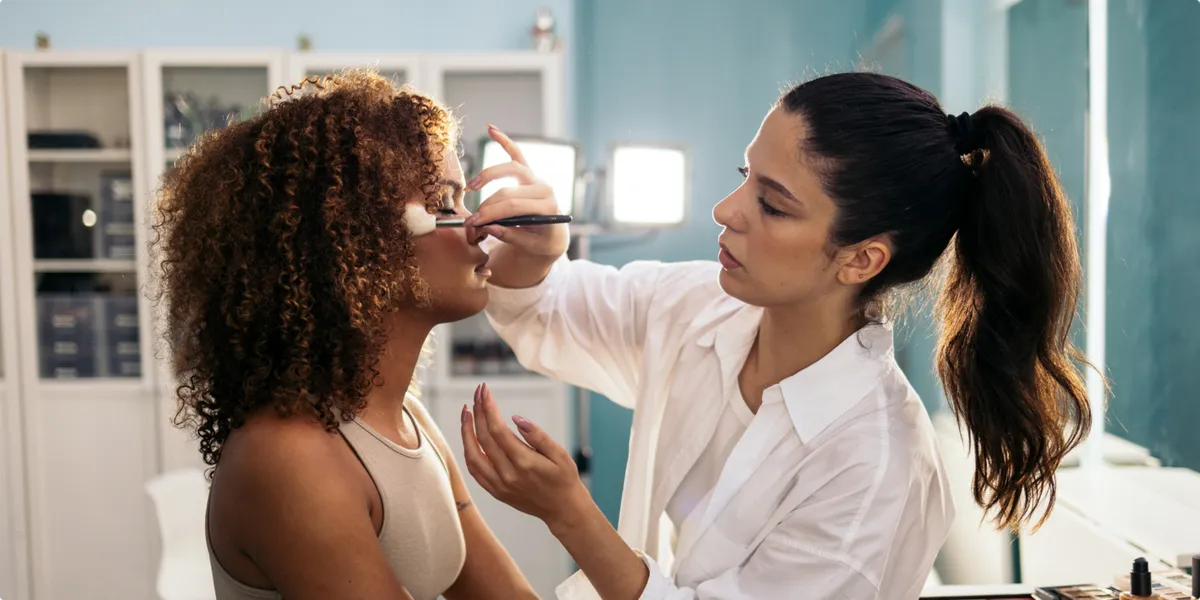
- Apply Theatre Makeup Principles
Apply theatre makeup techniques that consider lighting and stage requirements.
- Design Historical Period Makeup
Design and apply authentic historical makeup looks drawn from your research.
- Adapt Period Looks for Today
Adapt historical designs to appeal to modern audiences while keeping key elements.
- Create Theatrical Characters
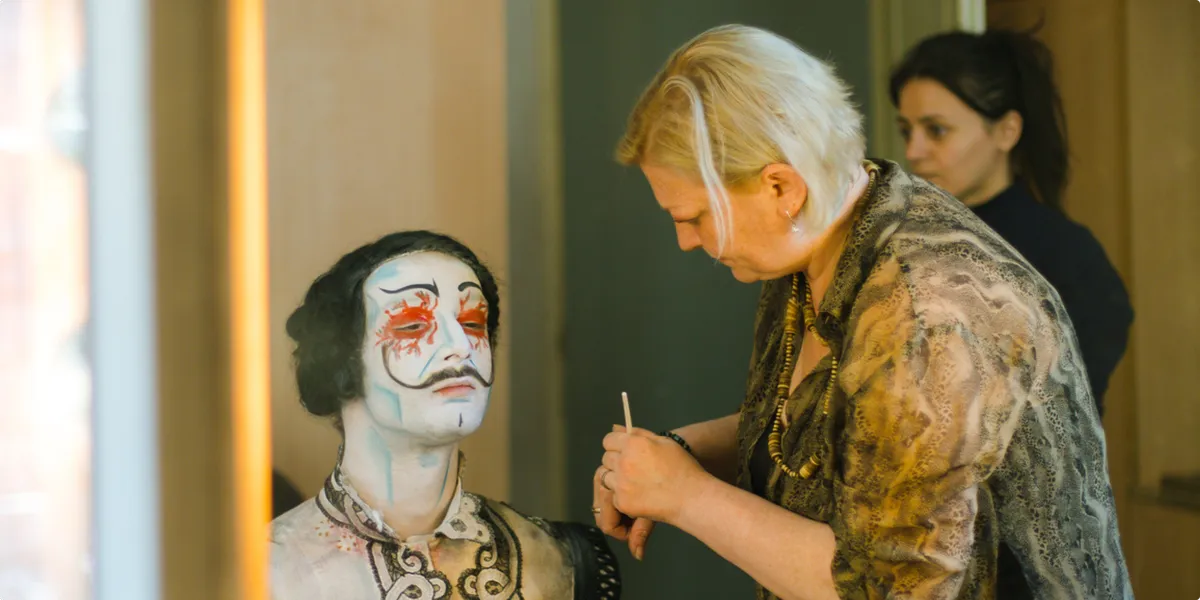
Create character makeups—such as Geisha or clowns—that communicate a clear concept.
Module Topics
In Module 6, we will cover the following topics and beyond:
- Introduction
- Theatre Stage Makeup
- Designing the Makeup
- Lighting and Makeup
- Employment in the Theatre
- How to Collaborate in a Creative Process
- Basic Male Makeup Techniques for Theatre
- Historical Period Makeup
- Period-Based Productions
- Authentic Makeup vs Interpretations
- Ancient Egyptian Period : 3200 BCE (Before Common Era) - 400 CE (Common Era)
- Ancient Roman Period : 753 BCE - 476 CE
- Ancient Greek Period : 800 BCE - 146 CE
- Medieval and Renaissance Periods : 476 - 1350 CE (Medieval/Middle Ages), 1350 - 1500 CE (Renaissance)
- Tudor and Elizabethan Periods : 1485 - 1558 CE (Tudor), 558-1603 CE (Elizabethan)
- Stuart and Restoration Periods : 1603 - 1714 CE (Stuart), 1660 - 1688 CE (Restoration)
- Georgian Period : 1714 - 1830 CE
- Regency Period : 1811 - 1837 CE
- Victorian Period : 1837 – 1901 CE
- Edwardian and George V Periods : 1901-1910 CE (Edwardian), 1910–1920 CE (George V)
- 1920s Period : 1920-1930 CE
- 1930s Period : 1930-1940 CE
- 1940s Period : 1940-1950 CE
- 1950s Period : 1950-1960 CE
- 1960s Period : 1960-1970 CE
- 1970s Period : 1970-1980 CE
- 1980s Period : 1980-1990 CE
- Period Makeup Demonstrations
- Ancient Egyptian Makeup
- Georgian Makeup
- Victorian Makeup
- 1920s Makeup
- 1980s Makeup
- Common Theatrical Characters
- Geisha Makeup
- Clown Makeup
- Traditional White-Faced Clown
Module Outcomes
By completing Module 6, you will:
- Apply the principles of theatre makeup, considering lighting and stage requirements.
- Design and apply authentic historical period makeups.
- Adapt period looks to appeal to contemporary audiences.
- Create theatrical character makeups such as Geisha or clowns.
Guidance Every Step of the Way
Our tutors will help you approach theatre makeup with both artistry and practicality. Their feedback will guide you in balancing authenticity, exaggeration, and creative expression for stage-ready results.
Discover the Modules
Explore our course outline page to learn more about the other modules.
View Course Outline


 Australia
  Canada
  India
India  Ireland
  Malaysia
  New Zealand
  Philippines
  Qatar
Qatar  Singapore
  South Africa
  United Arab Emirates
  United Kingdom
  United States