Module 6: Theatre Stage Makeup
This module is part of the CUA51020 – Diploma of Screen and Media (Specialist Makeup Services) at IMUA and explores the history and application of theatrical stage makeup across cultures and time periods. In this module, you will examine how makeup has been used in theatre to define character, convey emotion, and communicate effectively with an audience.
You will learn how stage makeup differs from film and television makeup, with particular focus on lighting, viewing distance, and exaggeration for visibility. The module also develops your understanding of characterisation and how makeup design supports performance in live theatre environments.
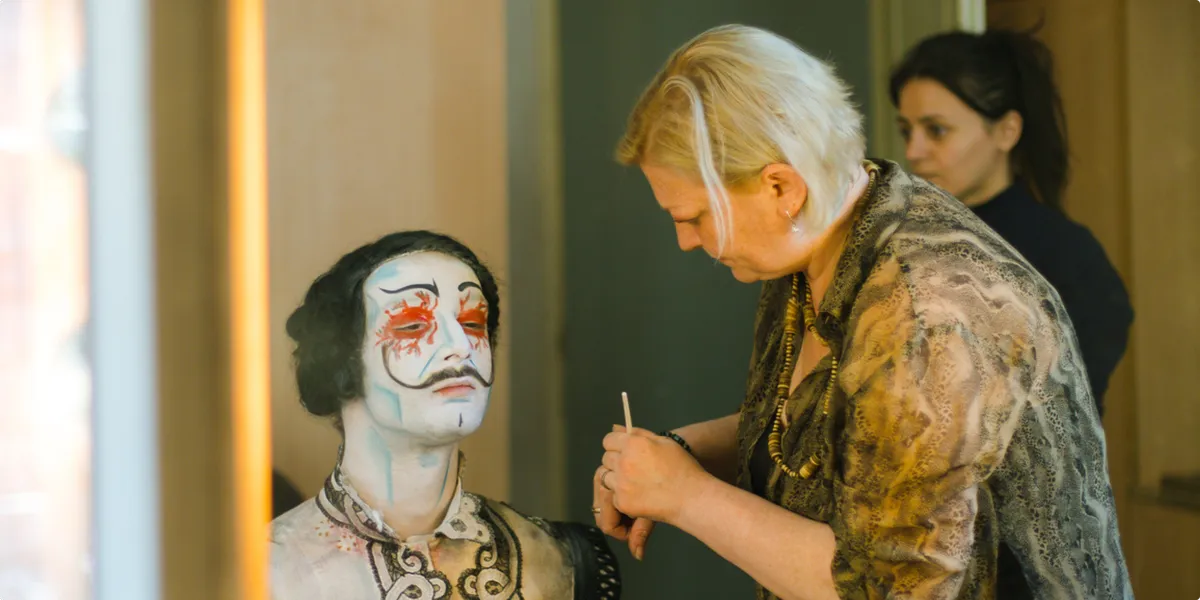
You will apply this knowledge by creating historical period makeup designs and iconic theatrical characters, such as the Geisha or traditional clown. These practical applications will require you to adapt authentic styles while meeting the visual and performance demands of contemporary theatre.
Why This Module Matters
Theatre makeup requires exaggerated, durable, and character-driven designs. This module equips you with the skills to bring characters to life on stage while deepening your understanding of historical and cultural influences.
- Explore how lighting affects stage makeup.
- Design and apply authentic historical looks.
- Adapt period styles for contemporary audiences.
- Create iconic theatrical characters through makeup.
By the end, you’ll be confident designing impactful stage looks that read clearly from a distance and under varied lighting.
As part of the Diploma, this module features assignments, written knowledge questions, portfolio development, and exclusive content designed to build your knowledge, practical skills, and professional confidence throughout the makeup artistry course.

What You’ll Learn
- Theatre Makeup Principles
Understand the demands of stage makeup and how it differs from camera-focused work.
- Lighting & Stage Considerations
Learn how coloured lights and distance affect the visibility and impact of makeup.
- Historical Period Makeup
Explore authentic period looks and develop research skills for accurate design work.
- Character & Clown Makeup
Practise creating theatrical characters such as Geisha or clowns with creative flair.
What You’ll Do
- Apply Theatre Makeup Principles
Apply theatre makeup techniques that consider lighting and stage requirements.
- Design Historical Period Makeup
Design and apply authentic historical makeup looks drawn from your research.
- Adapt Period Looks for Today
Adapt historical designs to appeal to modern audiences while keeping key elements.
- Create Theatrical Characters
Create character makeups, such as Geisha or clowns, that communicate a clear concept.
Units Covered
This module integrates practical skills from the following accredited units:
- CUAIND512 – Enhance professional practice using creative arts industry knowledge
- CUAIND412 – Provide freelance services
- CUAMUP411 – Design, apply and remove make-up
- CUAMUP412 – Maintain makeup and hair continuity
- CUAMUP413 – Style hair for productions
- CUAMUP512 – Design and apply specialised make-up
- CUAMUP513 – Design and apply special make-up effects
- CUADES412 – Interpret and respond to a design brief
- BSBCRT413 – Collaborate in creative processes
- CUADES511 – Implement design solutions
These units are taught through practical tasks, interactive tutorials, visual references, carefully selected external links, and practical assignments, ensuring you develop both your analytical and creative abilities. Our modules combine high-quality images, diagrams and theoretical content in an easy-to-digest format.
Please note: The above list is not indicative of unit completion; most of our units are taught (in parts) across multiple modules.

Module Topics
In Module 6, we will cover the following topics and beyond:
- Learning Outcomes Summary
- Units of Competency
- Introduction
- Theatre Stage Makeup
- Designing the Makeup
- Lighting and Makeup
- Employment in the Theatre
- Generic Theatrical Makeup Kit
- How to Collaborate in a Creative Process
- After Completion of the Production/Project
- Basic Male Makeup Techniques for Theatre
- Historical Period Makeup
- Period-Based Productions
- Authentic Makeup vs Interpretations
- Ancient Egyptian Period : 3200 BCE (Before Common Era) - 400 CE (Common Era)
- Ancient Roman Period : 753 BCE - 476 CE
- Ancient Greek Period : 800 BCE - 146 CE
- Medieval and Renaissance Periods : 476 - 1350 CE (Medieval/Middle Ages), 1350 - 1500 CE (Renaissance)
- Tudor and Elizabethan Periods : 1485 - 1558 CE (Tudor), 1558-1603 CE (Elizabethan)
- Stuart and Restoration Periods : 1603 - 1714 CE (Stuart),
- 1660 - 1688 CE (Restoration)
- Georgian Period : 1714 - 1830 CE
- Regency Period : 1811 - 1837 CE
- Victorian Period : 1837 – 1901 CE
- Edwardian and George V Periods : 1901-1910 CE (Edwardian), 1910–1920 CE (George V)
- 1920s Period : 1920-1930 CE
- 1930s Period : 1930-1940 CE
- 1940s Period : 1940-1950 CE
- 1950s Period : 1950-1960 CE
- 1960s Period : 1960-1970 CE
- 1970s Period : 1970-1980 CE
- 1980s Period : 1980-1990 CE
- Period Makeup Demonstrations
- Ancient Egyptian Makeup
- Georgian Makeup
- Victorian Makeup
- 1920s Makeup
- 1980s Makeup
- Common Theatrical Characters
- Geisha Makeup
- Hairstyles
- General Technique for Geisha Theatrical Makeup
- Clown Makeup
- The History of Clowns
- Types of Traditional Clowns
- Traditional White-Faced Clown
- Blotting Out / Covering the Eyebrow
- Makeup Removal
- Module Exercises
- Assignment 6
Module Outcomes
By completing Module 6, you will be able to:
- Apply theatrical makeup principles, considering lighting, distance, and stage requirements.
- Design and apply authentic historical period makeup styles.
- Adapt traditional period looks to meet contemporary performance expectations.
- CCreate recognisable theatrical character makeup designs, such as Geisha or clown characters.
Guidance Every Step of the Way
Our tutors
will help you approach theatre makeup with both artistry and practicality. Their feedback will guide you in balancing authenticity, exaggeration, and creative expression for stage-ready results.
Discover the Modules
Explore our course outline page to learn more about the other modules.
View Course Outline


 Canada
  Hong Kong
  India
India  Ireland
  Malaysia
  New Zealand
  Philippines
  Qatar
Qatar  Singapore
  South Africa
  United Arab Emirates
  United Kingdom
  United States