Module 1: Makeup Products & Equipment

This foundational module introduces you to the world of makeup artistry and is part of the CUA51020 – Diploma of Screen and Media (Specialist Makeup Services) at IMUA, an internationally accredited program aligned with the Australian Qualifications Framework (AQF) Level 5 and regulated by the Australian Skills Quality Authority (ASQA). This module forms part of a nationally recognised Diploma and supports the development of industry-aligned skills and knowledge.

Module 1 introduces the essential products, brushes, tools, and equipment used by professional makeup artists and explains how each item functions within industry practice. You will develop a clear understanding of different product types, application tools, and kit components, as well as how to select, organise, and maintain them for professional use. This module also introduces face charts and their role in planning, testing, and communicating makeup designs before application.

You will explore colour theory from a makeup artistry perspective, learning how colour, undertones, and contrast influence makeup outcomes across different faces and contexts. Alongside this, the module places strong emphasis on professional hygiene, safety, and best-practice procedures, including correct sanitisation of tools and products and maintaining a safe working environment. These foundational skills underpin all practical work throughout the course and are essential for meeting professional and industry standards.
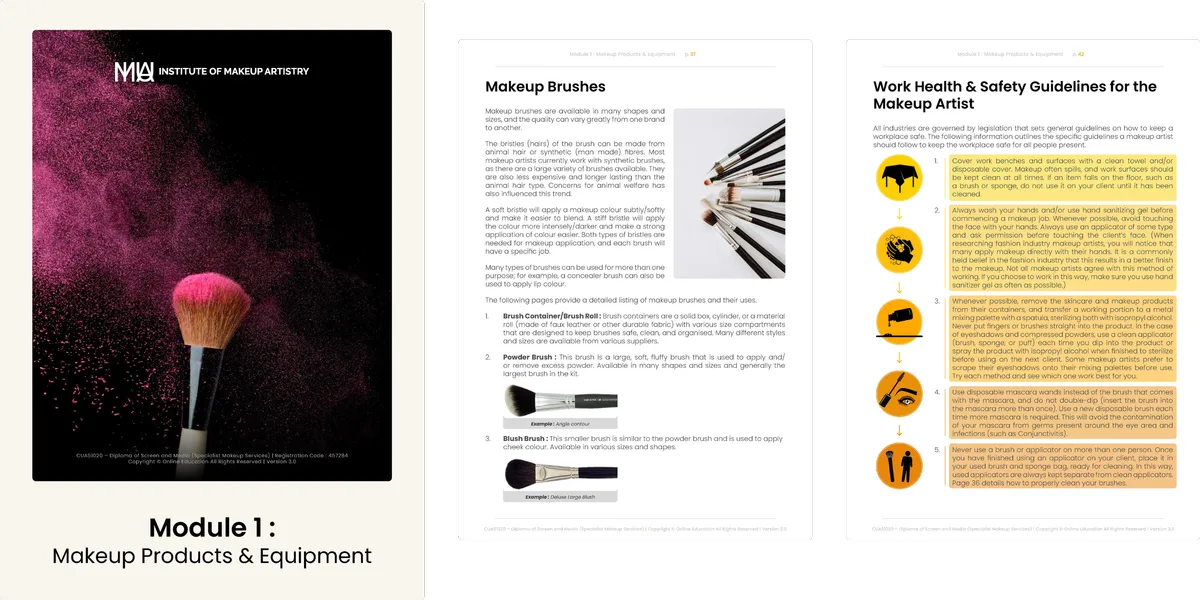


Module 1 Preview


Why This Module Matters

Every professional makeup artist begins with a solid understanding of their tools and products. By learning what belongs in a professional kit, how to use brushes and tools effectively, and how to maintain proper hygiene, you’ll establish habits that support your artistry throughout your career.

  • Recognise and use a wide variety of makeup products and brushes.
  • Build confidence in the essentials of a professional makeup kit.
  • Practise hygienic and safe application techniques.
  • Understand colour theory and apply it to makeup looks.
  • Use face charts as a creative planning and design tool.

By the end of this module, you’ll know your kit inside and out and be ready to apply your knowledge safely and creatively.

As part of the Diploma, this module features assignments, written knowledge questions, portfolio development, and exclusive content designed to build your knowledge, practical skills, and professional confidence throughout the makeup artistry course.


What You'll Learn

What You’ll Learn

  • Makeup Products & Tools
    Explore essential brushes, tools, and products used in core makeup techniques.
  • Makeup Kit Essentials & Hygiene
    Build a pro kit and follow key hygiene practises for safe, high-quality application.
  • Colour Theory for Makeup Artists
    Learn core colour principles and apply them to create balanced, impactful looks.
  • Face Charts
    Use face charts to plan, design, and practise makeup looks before application.
What You'll Do


What You’ll Do

  • Core Traits & Hygiene Skills
    Learn the key traits of a successful MUA and essential hygiene standards.
  • Select Products for a Professional Kit
    Choose core kit products and understand their purpose in application.
  • Skin Prep & Application Skills
    Prepare and apply foundation, concealer, and powder for a range of skin types.
  • Analyse Application Sequences
    Compare two sequences and build confident, consistent workflow habits.


Units Covered

This module integrates practical skills from the following accredited units:

  • CUAIND512 – Establish and maintain safe creative practice
  • CUAMUP411 – Design, apply and remove make-up

These units are taught through practical tasks, interactive tutorials, visual references, carefully selected external links, and practical assignments, ensuring you develop both your analytical and creative abilities. Our modules combine high-quality images, diagrams and theoretical content in an easy-to-digest format.

Please note: The above list is not indicative of unit completion; most of our units are taught (in parts) across multiple modules.

NRT Logo


Module 1 Course Preview — Makeup Products & Equipment


Module Topics

In Module 1, we will cover the following topics and beyond:

  • Index
  • Important Information
  • Learning Outcomes Summary
  • Units of Competency
  • Video Tutorials
  • Links
  • Student Handbook
  • Introduction to the Course
  • Welcome!
  • Ten Attributes of a Successful Makeup Artist
  • The Author & Guest Makeup Artists
  • About the Author : Rachel Dal Santo
  • Guest Makeup Artist : Tatiana Stutz
  • Guest Makeup Artist : Catherine Farren-Price
  • Guest Makeup Artist : Colin Wilson
  • Tools and Products
  • An Introduction to the Makeup Artist’s Kit
  • Equipment, Skincare and WHS
  • Makeup Products
  • Special Effects Products
  • Makeup Brushes
  • Purchasing Your Kit
  • Work Health and Safety (WHS)
  • Work Health & Safety Guidelines for the Makeup Artist
  • Cleaning Your Brushes, Sponges, and Powder Puffs
  • Brushes
  • Sponges and Powder Puffs
  • Australian Work, Health & Safety (WHS) Legislation and Requirements
  • Government Legislation that Applies to Makeup Artists
  • General WHS Guidelines for Makeup Artists
  • How to Complete a Patch Test and Create a Cold Compress
  • Responsibility for Implementation
  • Implementation Assistance
  • Additional Responsibilities and Duties of the Employer
  • Material Safety Data Sheets (MSDS) and Other
  • Responsibilities of Manufacturers and Suppliers
  • Film/Television Industry Specific Safety Considerations
  • WHS Procedures and Documentation
  • Risk Management
  • Assessing Risk Specifically in the Creative Arts Industry
  • Managing Risks
  • Steps for Hazard Control
  • Safety Signage
  • Reporting Accidents and Hazards
  • Unsafe Work Practises
  • How to Plan and Implement WHS Systems
  • Components of a WHS System
  • Creating a Good WHS System
  • Managing a WHS System
  • Implementing New Health and Safety Processes
  • Colour Theory for the Makeup Artist
  • Understanding Colour
  • Complementary Colours
  • Primary Colours
  • Secondary Colours
  • Tertiary Colours
  • Warm Colours
  • Cool Colours
  • How this Applies to Makeup Artistry
  • The Language of Colour
  • Tint, Tone, and Shade
  • Neutral Colours
  • Monochromatic Colour Schemes
  • Colour Value
  • Hue
  • Face Charts
  • Makeup Designs: Guidelines for the Makeup Artist
  • Makeup Application Basics
  • Skin Types and Skin Conditions
  • Features of Different Skin Types
  • Features of Different Skin Conditions
  • Contraindications of the Skin
  • Contraindications Specifically for False Eyelash Application
  • Skin Conditions Which are not Contagious
  • Ingredients in Makeup and Skin Care Products
  • Skincare Products
  • Cleansers
  • Eye Makeup Removers
  • Micellar Water
  • Makeup Removal Wipes
  • Toner
  • Moisturiser
  • Exfoliating Scrub
  • Lip Balm
  • Skin Primer
  • Barrier Cream
  • Sun Block
  • Facial Antiperspirants
  • Concealer Types and Application
  • Lotion
  • Crème
  • Application of Concealer
  • Foundation Types and Application
  • Liquid/Fluid Foundations
  • Crème Foundations
  • Powder Foundations
  • How to Select the Correct Shade of Foundation
  • How to Apply Foundation
  • How to Choose a Foundation According to Skin Type
  • Mixing Foundations
  • Popular Foundation, Primer and Moisturiser Brands Currently Used
  • in the Film, Television and Photography Industries
  • Popular Foundations
  • Popular Foundation Choices for Men on Camera
  • Makeup Brands That Provide a Large Selection of
  • Foundation Shades for Darker Skin Tones
  • Popular Powder Products (to Set Foundation and Remove Shine)
  • Popular Skin Primer Products
  • Popular Moisturisers
  • Powder Types and Usage
  • Loose Powder
  • Compressed Powder
  • Correcting Skin Problems and Covering Tattoos
  • Module Exercises
  • Assignment 1
  • Stay Connected
  • The IMUA Community


Module Outcomes


By completing Module 1, you will be able to:

  • Demonstrate professional hygiene, safety, and sanitation practices in makeup application.
  • Apply colour theory principles to design balanced and effective makeup looks.
  • Prepare and apply foundation, concealer, and powder for a range of skin types and conditions.
  • Use face charts to plan, practise, and document makeup applications.
  • Identify and select the essential products and tools required for a professional makeup artistry kit.


Guidance Every Step of the Way


Throughout the course, you’ll be guided by our expert makeup artistry tutors. They are here to help you understand both the artistry and professionalism of kit building. From selecting products to refining your brushwork, they’ll ensure you feel confident and supported as you begin your journey into makeup artistry.


Discover the Modules

Explore our course outline page to learn more about the other modules.

View Course Outline

Contact Us

Complete the form below, and we will get back to you as soon as possible.

By providing your email address, you agree to receive further email communication relating to our courses.


Download our free prospectus

By providing your email address, you agree to receive further email communication relating to our courses.